Introduction
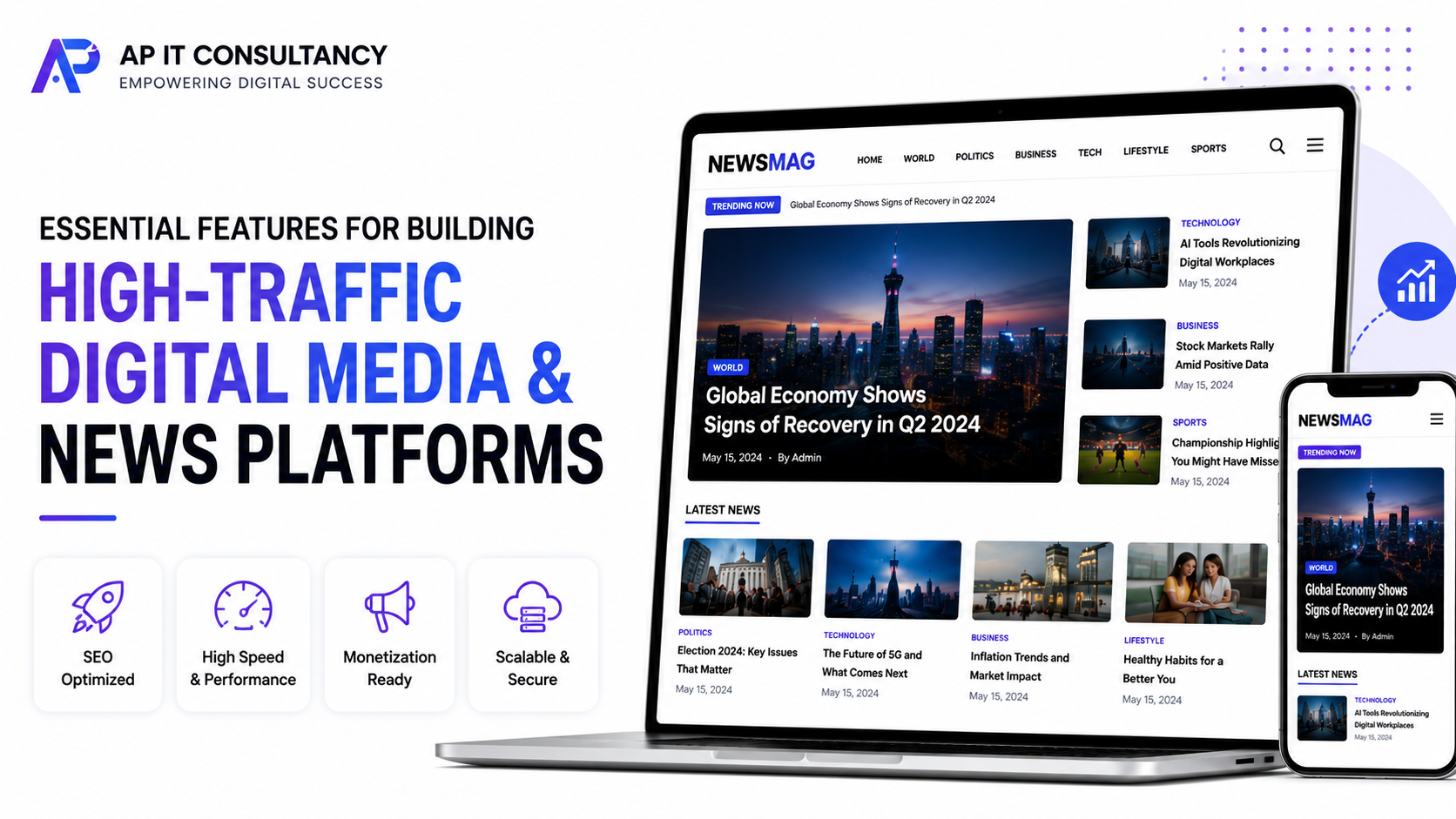
The digital publishing industry has evolved rapidly over the past decade, transforming how people consume news, entertainment, business updates, and educational content. Millions of readers now expect instant access to breaking news, personalized recommendations, fast-loading pages, and seamless experiences across smartphones, tablets, and desktops. As competition continues to grow, simply publishing high-quality articles is no longer enough. Digital media companies must build websites that are fast, scalable, secure, and optimized for both readers and search engines.
A high-traffic news platform must handle thousands—or even millions—of visitors while maintaining excellent performance. During major events or breaking news, sudden traffic spikes can overwhelm poorly optimized websites, leading to slow loading speeds, downtime, and frustrated readers. Choosing the right technology stack, website architecture, and content management strategy is essential for delivering a reliable user experience.
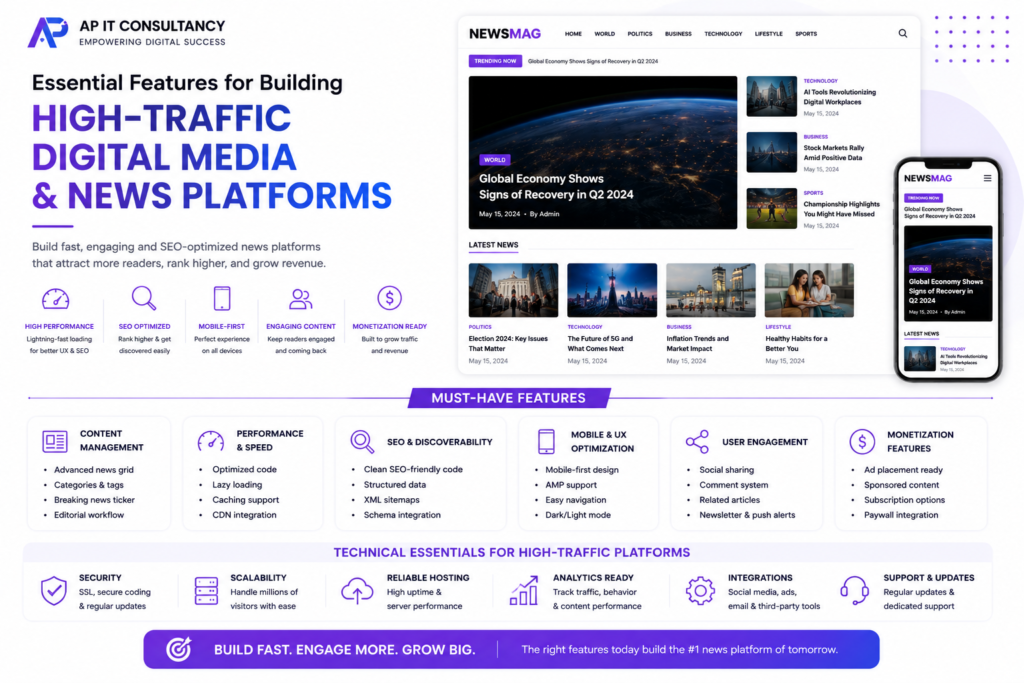
Whether you’re creating an online newspaper, a digital magazine, a technology blog, a financial publication, or a regional news portal, understanding the essential features of a modern news platform can help you build a website that attracts readers, performs well in search engines, and supports long-term growth. This guide explores the key features every high-traffic digital media platform should include.
Fast Loading Speed
Website speed directly affects reader engagement and search engine rankings.
Visitors expect news articles to load almost instantly. If pages are slow, readers are likely to leave before consuming the content, increasing bounce rates and reducing page views.
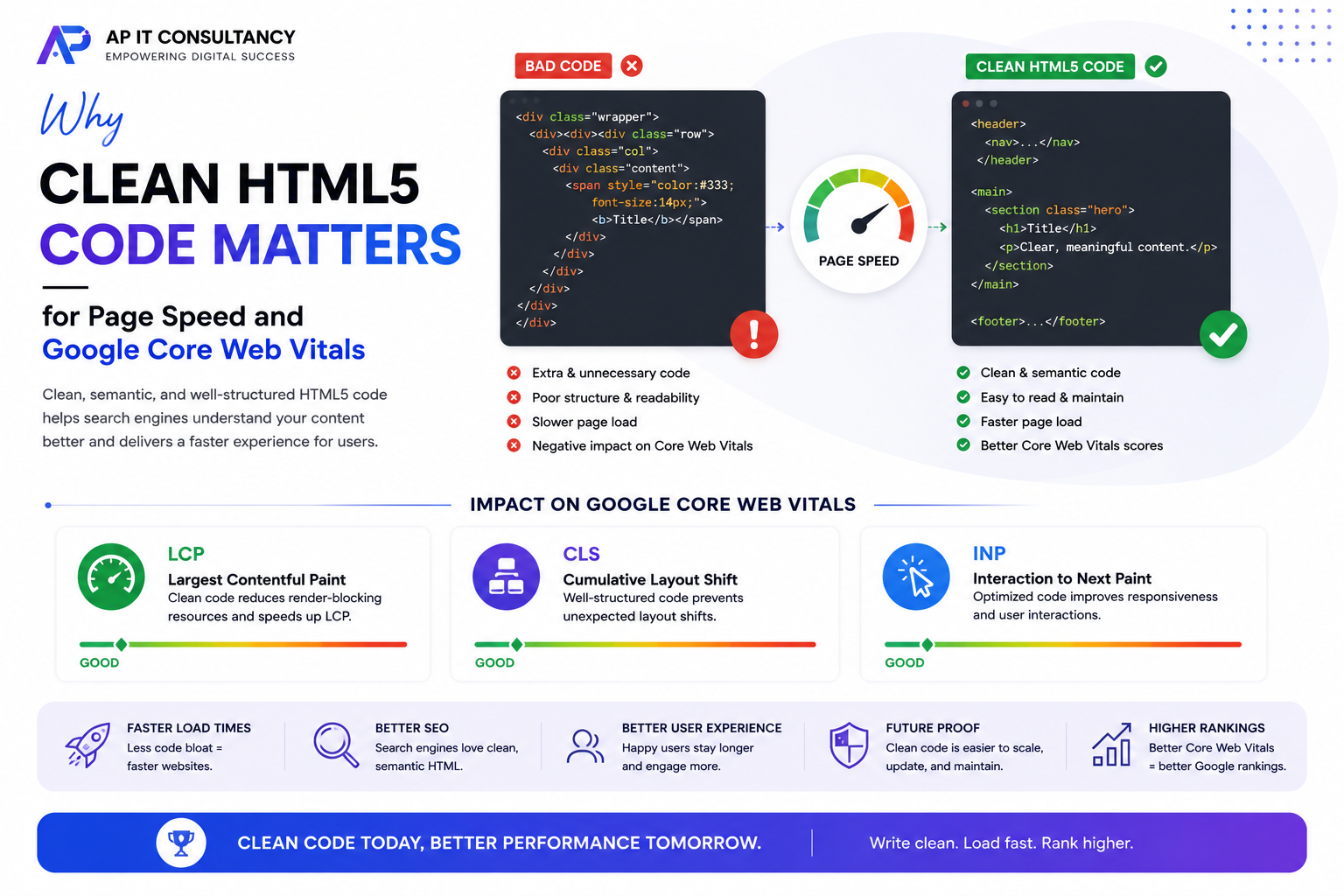
Fast-loading websites also improve Google Core Web Vitals, making them more competitive in search results.
Optimized HTML, lightweight CSS, efficient JavaScript, compressed images, browser caching, Content Delivery Networks (CDNs), and high-performance hosting all contribute to excellent loading speeds.
Performance should remain a priority throughout every stage of development.
Responsive Mobile Design
Mobile devices now generate the majority of traffic for many news websites.
A responsive design ensures articles, images, videos, navigation menus, and advertisements display correctly across all screen sizes.
Touch-friendly navigation, readable typography, optimized spacing, and mobile-friendly menus improve usability while encouraging longer browsing sessions.
A mobile-first design approach also supports Google’s mobile indexing strategy, improving search visibility.
Powerful Content Management System
Publishing hundreds or thousands of articles requires an efficient content management system.
WordPress remains one of the most popular choices because it allows editors, journalists, and administrators to publish, edit, categorize, and schedule content without advanced technical knowledge.
A strong CMS should support multiple authors, editorial workflows, media management, revision history, draft collaboration, and permission-based user roles.
Efficient content management simplifies daily publishing operations while reducing administrative overhead.
SEO-Friendly Architecture
Search engines remain one of the largest traffic sources for digital media websites.
SEO-friendly architecture includes clean HTML structure, optimized heading hierarchy, schema markup, XML sitemaps, breadcrumb navigation, responsive layouts, and descriptive URLs.
Internal linking between related articles improves both user engagement and search engine crawling.
Fast-loading pages combined with technically optimized content increase the likelihood of ranking for competitive news topics.
Advanced Search Functionality
Readers often visit news websites looking for specific topics, events, or articles.
An advanced search system allows users to quickly locate relevant content through keywords, categories, tags, authors, or publication dates.
Accurate search functionality improves user satisfaction while increasing page views by helping visitors discover older content.
Search filters become especially valuable for websites containing thousands of published articles.
Smart Content Organization
As content libraries grow, organization becomes increasingly important.
Categories, tags, featured stories, trending articles, editor’s picks, popular news, and related content sections help readers explore additional articles.
Clear navigation improves user experience while encouraging visitors to spend more time on the website.
Well-organized content also helps search engines understand relationships between articles and topics.
Advertisement Management
Advertising remains one of the primary revenue sources for digital publishers.
Modern news platforms should support flexible advertisement placement without negatively affecting usability.
Banner ads, native advertising, sponsored articles, affiliate promotions, and video advertisements should integrate naturally within the website design.
Balancing monetization with reader experience helps maximize revenue while maintaining audience loyalty.
Scalability for Traffic Spikes
Breaking news events often generate sudden increases in website traffic.
A scalable infrastructure allows websites to accommodate these spikes without crashing or slowing significantly.
Cloud hosting, load balancing, database optimization, caching systems, and CDN integration help maintain consistent performance during periods of high demand.
Planning for scalability from the beginning prevents costly performance issues later.
Multimedia Support
Modern journalism extends beyond written articles.
Readers increasingly expect videos, podcasts, image galleries, infographics, interactive charts, and live coverage alongside traditional news stories.
Supporting multiple content formats increases engagement while allowing publishers to reach broader audiences.
Optimized multimedia delivery ensures these features enhance rather than reduce website performance.
Social Media Integration
Social media platforms play a significant role in content distribution.
Integrated sharing buttons allow readers to easily share articles across popular social networks.
Automatic Open Graph metadata, Twitter Cards, and featured images improve how articles appear when shared online.
Strong social integration helps expand audience reach while increasing referral traffic.
Newsletter and Subscriber Management
Email newsletters remain one of the most effective methods for building loyal readership.
Subscription forms should be strategically placed throughout the website without interrupting the reading experience.
Automated newsletters featuring breaking news, trending stories, or personalized content encourage repeat visits while strengthening audience relationships.
Growing an email subscriber list also reduces dependence on search engines and social media algorithms.
Strong Security Measures
High-traffic news websites are frequent targets for cyberattacks.
Security features should include SSL encryption, Web Application Firewalls (WAF), malware scanning, regular software updates, secure authentication, automated backups, and two-factor authentication for administrators.
Protecting both editorial content and user data is essential for maintaining trust and minimizing downtime.
Routine security audits further reduce long-term risks.
Analytics and Audience Insights
Understanding reader behavior allows publishers to make informed editorial decisions.
Analytics tools provide valuable information about traffic sources, popular articles, reading time, bounce rates, conversion rates, and audience demographics.
These insights help editors identify successful content strategies while optimizing future publishing decisions.
Data-driven publishing often leads to stronger engagement and improved business performance.
Accessibility and Inclusive Design
A successful digital media platform should be accessible to every reader.
Semantic HTML, proper heading structures, descriptive image alt text, keyboard navigation, readable typography, and sufficient color contrast improve accessibility for users with disabilities.
Accessible websites also align with modern web standards while providing better experiences for all visitors.
Inclusive design benefits both users and search engines.
Final Thoughts
Building a successful high-traffic digital media or news platform requires much more than publishing quality journalism. Performance, scalability, security, responsive design, SEO, content organization, and user experience all work together to determine how effectively a website serves its audience. A well-designed platform ensures readers can quickly discover, consume, and share content while maintaining excellent performance even during periods of heavy traffic.
By investing in fast-loading infrastructure, a powerful content management system, mobile optimization, advanced search capabilities, robust security, and scalable architecture, publishers create a strong foundation for long-term growth. As digital publishing continues to evolve, media organizations that prioritize both technology and user experience will be better positioned to attract loyal readers, improve search visibility, and build sustainable online businesses in an increasingly competitive landscape.