Introduction
WordPress has been the world’s most popular content management system for years, powering millions of websites ranging from personal blogs to enterprise-level business platforms. While traditional WordPress continues to be a reliable choice, modern web development has introduced a new approach known as Headless WordPress. This architecture separates the backend content management system from the frontend presentation layer, giving developers greater flexibility, improved performance, and better scalability.
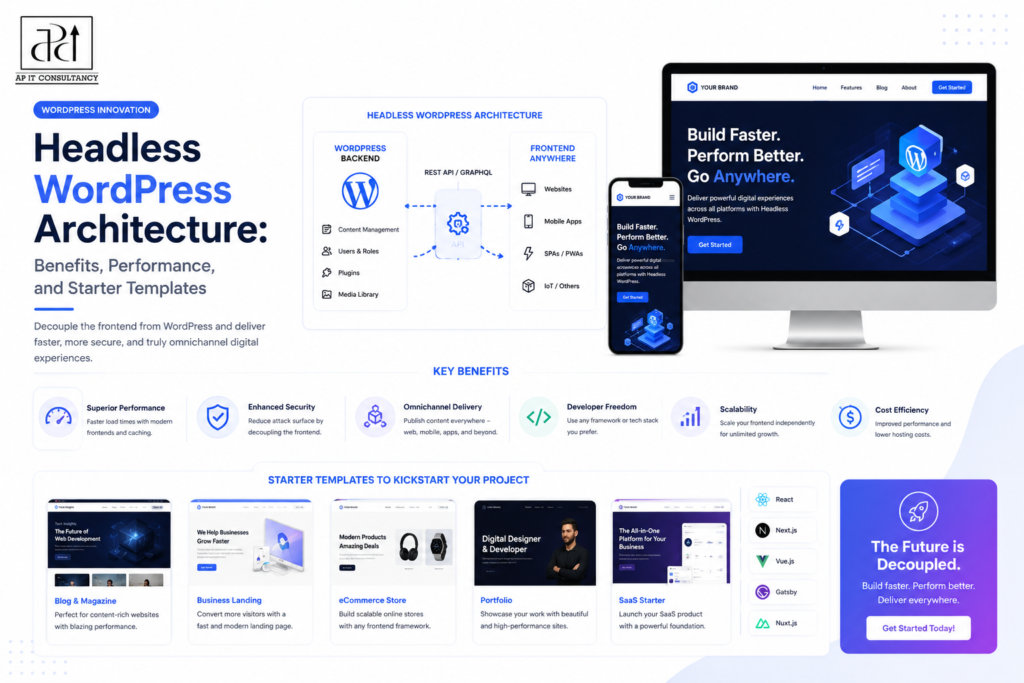
As businesses demand faster websites, richer user experiences, and support for multiple digital platforms, Headless WordPress has become increasingly popular among developers, agencies, and enterprises. Instead of relying on WordPress themes to display content, developers can use frameworks like React, Next.js, Vue, or Nuxt while WordPress continues managing content in the background through REST API or GraphQL.
Whether you’re building a corporate website, an eCommerce platform, a news portal, or a SaaS application, Headless WordPress offers significant advantages over traditional website development. In this article, we’ll explore how Headless WordPress works, its biggest benefits, performance improvements, and why starter templates can dramatically speed up your development process.
Understanding Headless WordPress Architecture
In a traditional WordPress website, the backend and frontend work together as a single system. WordPress stores the content, manages themes, renders pages, and delivers everything directly to visitors.
Headless WordPress changes this approach completely.
The WordPress dashboard remains responsible for creating and managing content, but the frontend is developed separately using modern JavaScript frameworks or static site generators. Communication between the frontend and WordPress happens through APIs such as the WordPress REST API or GraphQL.
This separation allows developers to build highly interactive websites without being restricted by traditional WordPress themes. Content can also be delivered across multiple platforms, including websites, mobile applications, smart TVs, and digital kiosks, from a single WordPress installation.
Why Businesses Are Choosing Headless WordPress
Modern businesses need websites that are faster, more scalable, and capable of supporting multiple digital experiences.
Headless WordPress offers exactly that.
Since the frontend is independent, developers can create highly customized interfaces while maintaining WordPress as a familiar content management system. Marketing teams continue publishing content through the WordPress dashboard, while developers work independently on the frontend without disrupting editorial workflows.
This flexibility makes Headless WordPress particularly attractive for startups, enterprise organizations, digital agencies, and growing eCommerce businesses.
Faster Website Performance
Website speed has become one of the most important ranking factors for both search engines and user experience.
Traditional WordPress themes often load unnecessary scripts, plugins, and styling files that increase page size and slow down performance.
A Headless WordPress setup allows developers to build lightweight frontends optimized specifically for speed. Modern frameworks such as Next.js support server-side rendering, static site generation, and intelligent caching, resulting in significantly faster page loading times.
Visitors benefit from smoother navigation, faster interactions, and better browsing experiences, while businesses enjoy improved engagement and higher conversion rates.
Better Security
Security is another major advantage of Headless WordPress architecture.
In traditional WordPress websites, the public-facing frontend and the WordPress admin panel exist within the same application. This increases the attack surface available to hackers.
With Headless WordPress, the frontend operates independently from the backend. Visitors interact only with the frontend application, while the WordPress dashboard remains protected behind authentication systems and secure APIs.
Although security still depends on proper configuration, this separation reduces many common attack vectors associated with traditional WordPress installations.
Improved Scalability
As websites grow, handling increased traffic becomes more challenging.
Headless WordPress architecture allows frontend applications to scale independently from the content management system. Developers can deploy frontend applications through global content delivery networks (CDNs) while keeping WordPress dedicated to content management.
This architecture performs especially well during traffic spikes caused by marketing campaigns, viral content, or seasonal sales.
Businesses expecting long-term growth often find Headless WordPress better suited for scaling than traditional setups.
Greater Developer Flexibility
One of the biggest reasons developers prefer Headless WordPress is creative freedom.
Instead of working within the limitations of PHP themes, developers can use modern technologies such as:
- React
- Next.js
- Vue.js
- Nuxt.js
- Angular
- Astro
- Gatsby
These frameworks provide advanced routing, component-based development, state management, and modern user interfaces that are difficult to achieve with traditional WordPress themes alone.
Developers can also integrate third-party APIs, authentication systems, payment gateways, and cloud services more efficiently.
Multi-Platform Content Delivery
Today’s businesses rarely publish content on a website alone.
The same content may appear on:
- Mobile applications
- Smart TVs
- Digital displays
- Customer portals
- Voice assistants
- Progressive Web Apps (PWAs)
Headless WordPress allows one centralized content management system to distribute content across multiple digital channels through APIs.
This reduces duplication while keeping branding and messaging consistent.
SEO Benefits of Headless WordPress
Many people mistakenly believe Headless WordPress hurts SEO.
In reality, modern frameworks like Next.js provide excellent SEO capabilities.
Server-side rendering and static site generation allow search engines to crawl fully rendered pages, improving indexability and page performance.
Combined with structured data, optimized metadata, clean URLs, XML sitemaps, and fast loading speeds, Headless WordPress can perform exceptionally well in search engine rankings.
When implemented correctly, it provides both technical SEO advantages and excellent user experience.
The Role of Starter Templates
Building a Headless WordPress project from scratch can take considerable time.
Starter templates simplify the development process by providing pre-built project structures, routing systems, API integrations, authentication support, and optimized frontend architecture.
Many starter templates include responsive layouts, reusable UI components, SEO configuration, image optimization, and deployment settings.
Developers can focus on customizing the application instead of building every feature from the ground up.
This significantly reduces development time while improving project consistency.
Choosing the Right Starter Template
Not every starter template is suitable for every project.
When evaluating templates, consider factors such as:
- Framework compatibility
- API integration
- SEO support
- Performance optimization
- Responsive design
- Deployment options
- Documentation quality
- Community support
A well-maintained starter template saves countless hours during development and reduces long-term maintenance challenges.
Challenges to Consider
Although Headless WordPress offers many benefits, it isn’t the perfect solution for every website.
Development complexity is generally higher than traditional WordPress.
Simple business websites may not require advanced JavaScript frameworks or API-based architecture.
Plugin compatibility can also vary since some WordPress plugins depend on traditional PHP themes for rendering frontend content.
Additionally, teams may need experience with React, Vue, or similar technologies to manage Headless projects effectively.
Understanding these challenges helps businesses decide whether Headless WordPress aligns with their goals.
Who Should Use Headless WordPress?
Headless WordPress is an excellent choice for organizations that need high performance, scalability, and modern user experiences.
It works particularly well for:
- Enterprise websites
- SaaS platforms
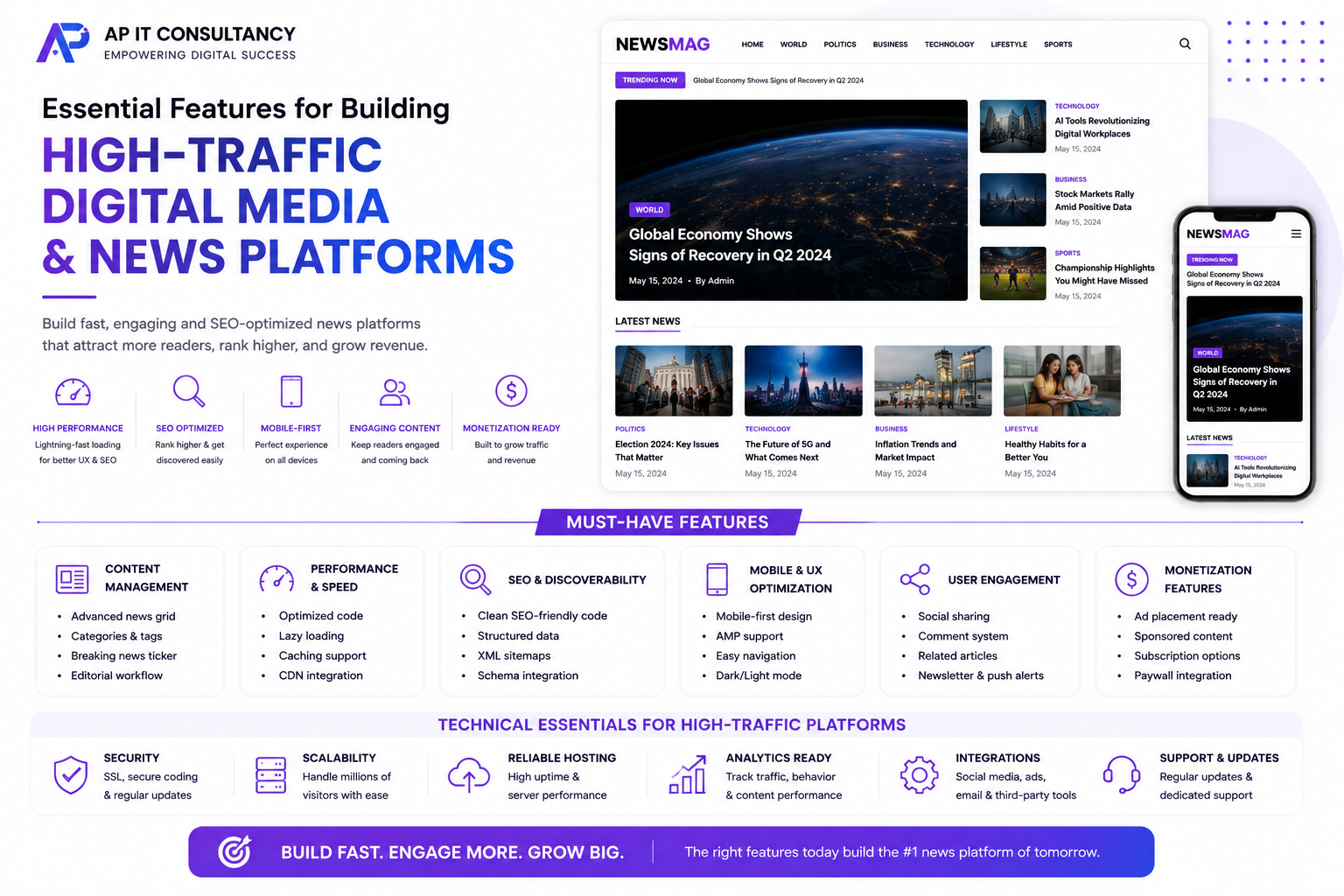
- News portals
- eCommerce stores
- Educational platforms
- Membership websites
- Large corporate websites
- Multi-language platforms
- Progressive Web Apps
Smaller websites with basic requirements may still benefit from traditional WordPress due to its simplicity and lower development costs.
Final Thoughts
Headless WordPress represents the future of modern web development by combining the flexibility of today’s JavaScript frameworks with the reliability of the world’s leading content management system. It enables businesses to build lightning-fast, highly scalable, and secure websites while maintaining a familiar content publishing workflow.
Although implementing Headless WordPress requires more technical expertise than a traditional setup, the long-term benefits often outweigh the additional complexity. Faster performance, stronger security, improved scalability, multi-platform content delivery, and greater development flexibility make it an attractive option for businesses looking to future-proof their digital presence.
Whether you’re launching a high-traffic news portal, a global eCommerce platform, or a custom enterprise application, adopting Headless WordPress architecture can provide the speed, flexibility, and performance needed to stay competitive in an increasingly digital world. By selecting the right starter template and development framework, you’ll be well positioned to create exceptional user experiences while simplifying long-term website management.