Introduction
Website performance has become one of the most important factors in creating a successful online presence. Whether you’re building a business website, an eCommerce store, a blog, or a portfolio, users expect pages to load quickly and provide a smooth browsing experience. Even the most attractive design can fail if visitors are forced to wait for slow-loading pages or encounter unstable layouts. In addition to improving user satisfaction, website speed has become a key factor in search engine optimization, making performance an essential part of modern web development.
One of the easiest ways to improve performance is by writing clean and well-structured HTML5 code. While many developers focus on optimizing images, caching, and JavaScript, the quality of the HTML structure itself is often overlooked. Clean HTML5 creates a solid foundation that allows browsers to render pages more efficiently, improves accessibility, and helps search engines understand website content more effectively.
Google’s Core Web Vitals emphasize real user experience by measuring loading speed, responsiveness, and visual stability. Websites built with clean HTML5 are better positioned to achieve strong Core Web Vitals scores because they reduce unnecessary complexity and improve rendering performance. In this article, we’ll explore why clean HTML5 matters, how it impacts page speed, and the best practices developers should follow to build faster, SEO-friendly websites.
Understanding HTML5
HTML5 is the latest standard for structuring web pages and web applications.
It introduced semantic elements such as <header>, <nav>, <main>, <section>, <article>, <aside>, and <footer>, allowing developers to organize content more meaningfully than older versions of HTML.
These semantic elements improve readability for developers, accessibility for assistive technologies, and content understanding for search engines.
A well-organized HTML document also allows browsers to render pages more efficiently, reducing unnecessary processing during page loading.
Why Clean Code Improves Performance
Clean HTML5 eliminates unnecessary elements, duplicate code, and poorly structured layouts that increase page complexity.
When browsers receive lightweight and properly organized HTML, they can parse and display the page more quickly. Less processing means faster rendering and a smoother experience for visitors.
Although HTML files are generally smaller than CSS or JavaScript resources, inefficient markup can still slow down rendering by creating unnecessarily complex Document Object Models (DOM).
Reducing HTML complexity helps browsers work more efficiently while supporting better website performance.
HTML Structure and Core Web Vitals
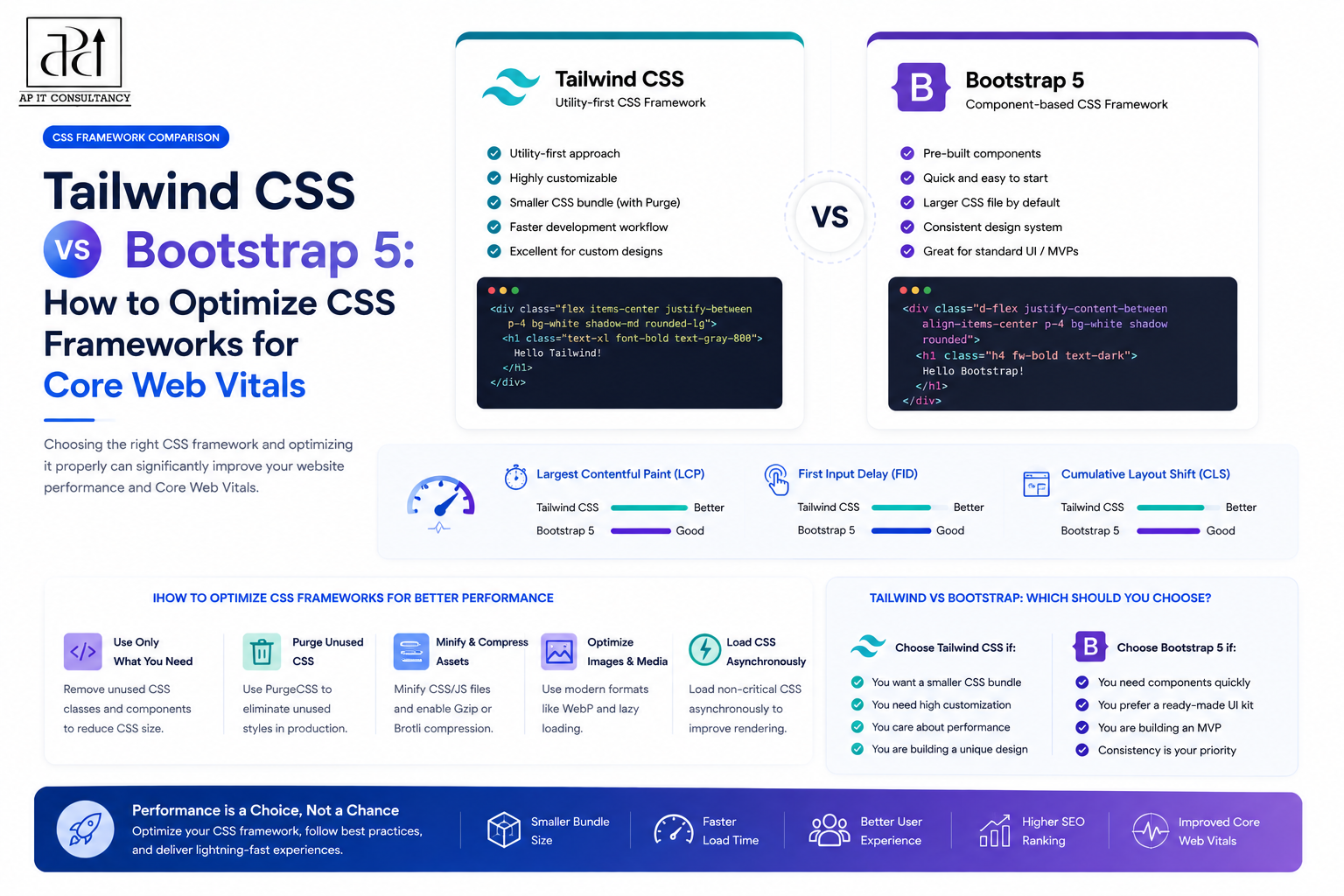
Google’s Core Web Vitals focus on three primary areas of user experience: loading performance, responsiveness, and visual stability.
A clean HTML structure contributes to all three.
Proper document hierarchy allows browsers to identify important content faster, improving Largest Contentful Paint (LCP).
Organized layouts reduce unnecessary reflows and layout shifts, helping improve Cumulative Layout Shift (CLS).
Efficient HTML also works alongside optimized CSS and JavaScript to support faster interactions, positively influencing Interaction to Next Paint (INP).
Together, these improvements create a smoother browsing experience that benefits both users and search engine rankings.
Semantic HTML Supports Better SEO
Search engines rely on HTML structure to understand webpage content.
Using semantic elements helps Google identify important sections such as page titles, navigation, articles, and supporting information.
Clear heading hierarchy using properly ordered H1, H2, and H3 tags makes content easier to interpret while improving accessibility.
Semantic HTML also supports structured data implementation and enhances compatibility with modern SEO practices.
Instead of relying on excessive <div> elements, developers should use meaningful HTML elements whenever possible.
Reduce Unnecessary DOM Elements
A common mistake in web development is creating deeply nested HTML structures.
Excessive wrapper elements increase the size of the Document Object Model, requiring browsers to spend more time calculating layouts and rendering pages.
Keeping the DOM simple improves browser performance and reduces rendering overhead.
Removing unnecessary containers, empty elements, and duplicate markup creates cleaner code that is easier to maintain and faster to process.
Faster Rendering Means Better User Experience
Visitors expect websites to appear almost instantly.
Clean HTML helps browsers display visible content sooner because fewer elements require processing before rendering begins.
Combined with optimized CSS, efficient JavaScript loading, and compressed images, lightweight HTML contributes to significantly faster page loading.
A faster website encourages users to stay longer, explore additional pages, and complete desired actions such as purchases or contact form submissions.
Accessibility Benefits
Clean HTML5 improves accessibility by providing meaningful structure for screen readers and other assistive technologies.
Semantic elements clearly identify navigation areas, main content, articles, forms, and page sections, allowing users with disabilities to browse websites more efficiently.
Proper labels, descriptive alt text, logical heading order, and keyboard-friendly navigation further enhance accessibility.
Building accessible websites not only supports inclusivity but also aligns with modern web development standards.
Better Compatibility Across Browsers
Modern browsers are optimized to work with HTML5 standards.
Using valid HTML reduces rendering inconsistencies between Chrome, Firefox, Safari, Edge, and other browsers.
Clean code also improves compatibility across desktop computers, smartphones, tablets, and other connected devices.
Following HTML standards reduces debugging time while creating more consistent user experiences across different platforms.
Best Practices for Writing Clean HTML5
Developers should focus on simplicity and organization throughout every project.
Use semantic HTML elements instead of unnecessary generic containers.
Maintain a logical heading hierarchy with only one primary H1 element per page.
Keep HTML files properly indented and easy to read.
Avoid inline styling whenever possible by separating structure from presentation through external CSS.
Minimize unnecessary attributes, duplicate IDs, and redundant markup.
Validate HTML regularly to identify coding errors before deployment.
These small practices improve maintainability while contributing to better website performance.
Combine HTML Optimization with Other Techniques
Although clean HTML provides an excellent foundation, achieving exceptional performance requires additional optimization.
Compress images before uploading them and use modern formats like WebP or AVIF.
Minify CSS and JavaScript files to reduce download sizes.
Implement browser caching and Content Delivery Networks (CDNs) to improve loading speeds worldwide.
Use lazy loading for below-the-fold images and videos to reduce initial page weight.
Choosing lightweight frameworks and quality hosting further enhances overall website performance.
Together, these techniques complement clean HTML and produce excellent Core Web Vitals results.
Common HTML Mistakes That Hurt Performance
Many websites contain unnecessary nested containers, invalid markup, duplicated IDs, excessive inline styles, outdated HTML elements, and poorly organized content.
These mistakes increase rendering complexity, reduce maintainability, and sometimes create accessibility issues.
Developers should also avoid placing large amounts of unnecessary content above the fold, as this delays the rendering of important visual elements.
Regular code reviews and HTML validation help identify and eliminate these problems before they affect users.
Final Thoughts
Clean HTML5 is much more than tidy code—it forms the foundation of a fast, accessible, and SEO-friendly website. By using semantic elements, reducing unnecessary markup, maintaining a simple document structure, and following modern coding standards, developers create websites that load faster, perform better, and provide a smoother experience across all devices. These improvements not only benefit visitors but also help websites achieve stronger Google Core Web Vitals scores and improved search visibility.
While optimizing images, CSS, JavaScript, and hosting remains important, none of these techniques can fully compensate for poorly structured HTML. Starting every project with clean, well-organized HTML5 ensures your website is easier to maintain, more accessible, and better prepared for future web standards. For businesses, developers, and agencies aiming to build high-performing websites, clean HTML5 remains one of the simplest and most effective investments in long-term website success.