Introduction
A non-profit organization’s website is much more than an online presence—it’s a powerful platform for raising awareness, inspiring supporters, and driving donations. Whether the organization focuses on education, healthcare, environmental conservation, disaster relief, animal welfare, or community development, its website often serves as the first point of contact for potential donors, volunteers, and partners. A well-designed website can build trust and encourage generosity, while a confusing or slow website may cause visitors to leave before making a contribution.
One of the biggest challenges for non-profit organizations is converting website visitors into donors. Many people arrive with good intentions, but complicated donation forms, unclear messaging, slow-loading pages, or poor navigation can interrupt the giving process. Every additional click, unnecessary field, or distracting element increases the likelihood that a visitor will abandon their donation. Optimizing the donation funnel and improving the overall user experience (UX) helps organizations reduce friction and increase conversion rates.
A successful donation funnel guides visitors naturally from learning about the organization’s mission to completing a secure donation. Clear storytelling, emotional impact, transparent financial information, mobile-friendly design, and fast page performance all contribute to building donor confidence. At the same time, search engine optimization (SEO), accessibility, and responsive layouts ensure that the website reaches and serves a broader audience.
Whether you’re creating a new charity website or improving an existing one, investing in thoughtful UX design and a streamlined donation process can significantly increase fundraising success. This article explores the best practices for optimizing donation funnels and creating user experiences that encourage more people to support your mission.
Start with a Clear Mission Statement
Visitors should immediately understand what your organization does and why it matters.
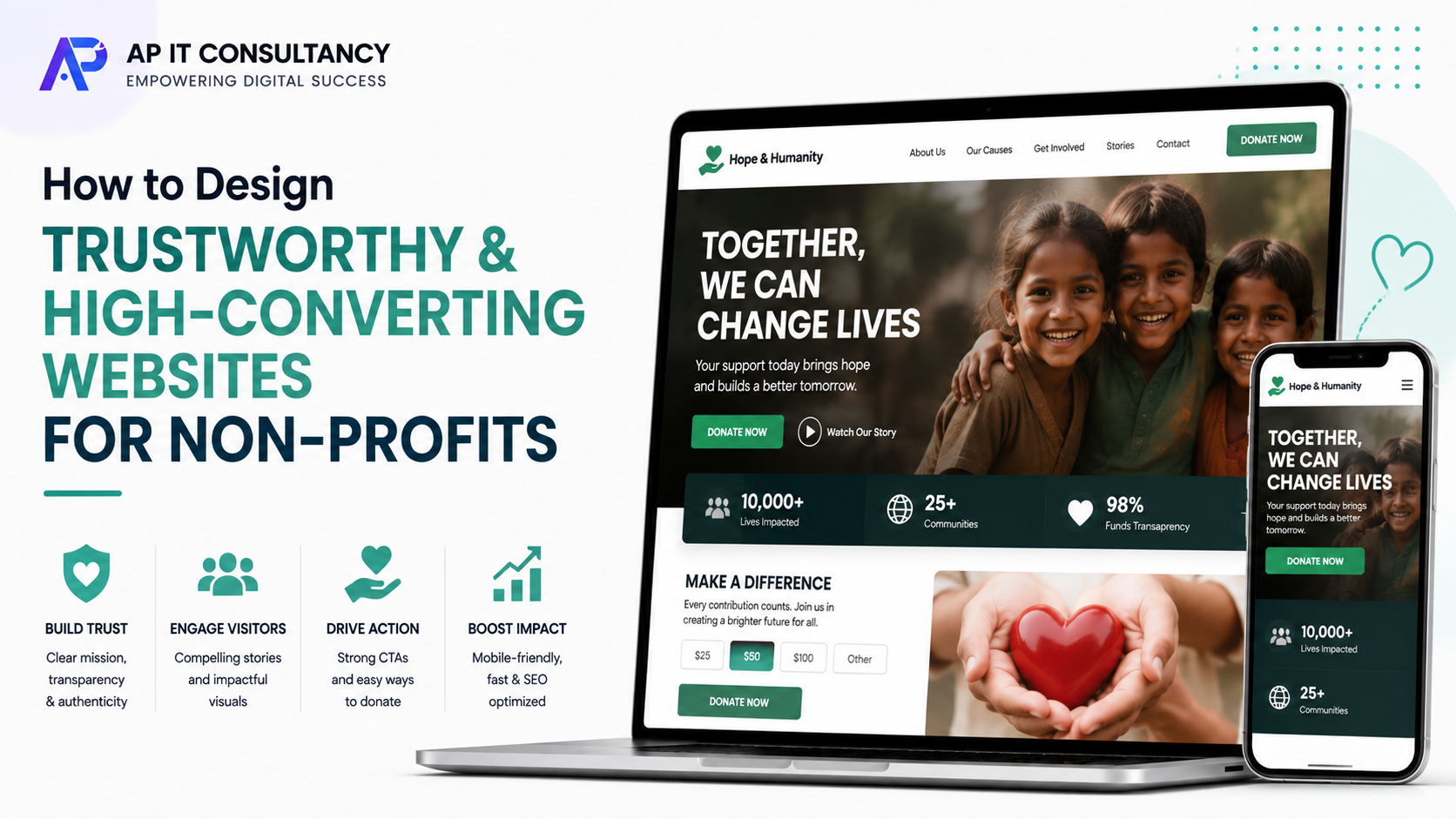
Your homepage should communicate your mission using simple, compelling language supported by meaningful visuals.
Avoid lengthy introductions or technical explanations.
A clear message helps visitors connect emotionally with your cause within the first few seconds of arriving on the website.
Strong first impressions increase donor confidence.
Create a Visible Call-to-Action
Every page should encourage visitors to take action.
Donation buttons should be easy to find and remain consistent throughout the website.
Use action-oriented phrases such as “Donate Now,” “Support Our Mission,” or “Make a Difference Today.”
Calls to action should stand out visually without overwhelming the overall design.
Clear guidance simplifies the donor journey.
Simplify the Donation Process
A complicated donation form often leads to abandoned contributions.
Request only the information necessary to complete the transaction.
Reduce unnecessary form fields, eliminate distractions, and minimize the number of steps required to donate.
Offering a streamlined checkout experience helps more visitors complete their donations successfully.
Convenience directly influences conversion rates.
Offer Multiple Donation Options
Different supporters have different giving preferences.
Allow visitors to choose one-time donations, monthly recurring contributions, or custom donation amounts.
Providing several payment methods such as credit cards, digital wallets, and secure online payment platforms improves accessibility.
Flexible payment options make donating easier for a wider audience.
Build Trust Through Transparency
Donors want confidence that their contributions will create meaningful impact.
Share financial reports, annual summaries, project updates, success stories, and information about how donations are used.
Displaying certifications, partnerships, and testimonials further strengthens credibility.
Transparency encourages long-term donor relationships.
Trust remains one of the strongest drivers of charitable giving.
Tell Powerful Stories
Facts are important, but stories create emotional connections.
Share real experiences that demonstrate how your organization has helped individuals or communities.
Include authentic photographs, videos, testimonials, and measurable outcomes whenever possible.
Compelling storytelling inspires empathy while motivating visitors to contribute.
Personal stories make charitable missions more relatable.
Optimize for Mobile Users
Many donors visit non-profit websites using smartphones.
Responsive design ensures that donation forms, payment pages, navigation menus, and content remain easy to use on smaller screens.
Large buttons, readable typography, and fast-loading pages improve mobile usability.
A positive mobile experience increases completed donations across all devices.
Improve Website Speed
Performance directly affects user engagement.
Slow-loading websites often discourage potential donors before they reach the donation page.
Compress images, optimize code, reduce unnecessary scripts, and use reliable hosting to improve loading times.
Fast websites create smoother experiences while supporting better search engine rankings.
Every second saved can improve donation conversions.
Reduce Navigation Distractions
The donation journey should remain focused.
Limit unnecessary pop-ups, excessive menu options, and unrelated content that may interrupt the visitor’s decision-making process.
Guide users naturally from learning about your mission to completing their donation.
A clean interface improves both usability and conversion rates.
Highlight Social Proof
People are more likely to donate when they see others supporting the same cause.
Display testimonials, donor feedback, volunteer stories, fundraising milestones, and community achievements throughout the website.
Showing the number of lives impacted or successful projects completed reinforces credibility.
Social proof encourages greater participation.
Ensure Website Accessibility
Every supporter should be able to access your website regardless of ability.
Use readable fonts, strong color contrast, descriptive image alt text, keyboard navigation, and semantic HTML to improve accessibility.
Inclusive design allows more people to engage with your organization while supporting compliance with accessibility standards.
Accessibility also benefits search engine optimization.
Monitor and Improve the Donation Funnel
Optimization should continue after the website launches.
Analyze visitor behavior, donation completion rates, bounce rates, and user journeys to identify where potential donors leave the process.
A/B testing different layouts, button designs, donation forms, and messaging helps improve performance over time.
Continuous improvements lead to higher fundraising success.
Final Thoughts
Optimizing donation funnels and UX design is essential for helping non-profit organizations achieve their fundraising goals. A clear mission, compelling storytelling, simple donation process, mobile-friendly design, fast-loading pages, transparent communication, and strong calls to action work together to create positive donor experiences that encourage generosity. Every improvement that reduces friction or builds trust can have a meaningful impact on donation conversions and long-term supporter relationships.
As digital fundraising continues to grow, organizations that prioritize user experience alongside their mission will be better positioned to attract new donors and retain existing supporters. By combining thoughtful website design with accessibility, performance optimization, and continuous testing, non-profits can create engaging online experiences that inspire action, strengthen community support, and generate sustainable funding for the causes they serve.