Introduction
For non-profit organizations, a website is much more than an online presence—it’s a powerful platform for building trust, attracting donors, recruiting volunteers, sharing success stories, and creating meaningful social impact. Unlike commercial businesses that primarily focus on selling products or services, non-profits rely on credibility and emotional connection to inspire people to support their mission. A well-designed website can transform visitors into donors, volunteers, advocates, and long-term supporters, while a poorly designed one may discourage engagement regardless of the organization’s purpose.
Today’s donors expect transparency, professionalism, and a seamless online experience before making contributions. They want to understand the organization’s mission, see how donations are used, read authentic success stories, and complete donations quickly and securely. If the website is slow, outdated, difficult to navigate, or lacks important information, visitors may lose confidence and choose not to contribute.
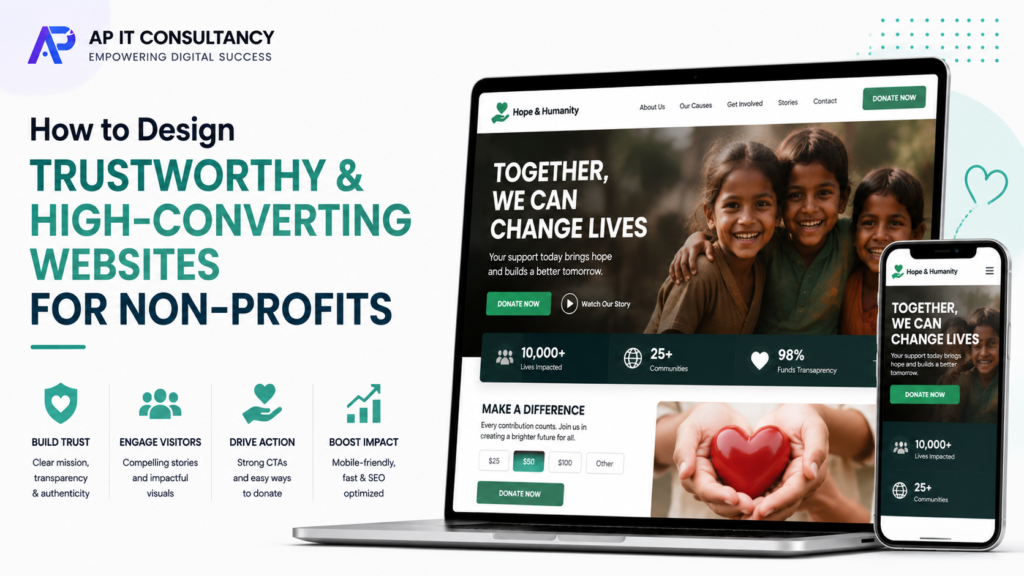
Designing a trustworthy and high-converting non-profit website requires balancing emotional storytelling with excellent usability, fast performance, and clear calls to action. Every page should reinforce the organization’s credibility while guiding visitors toward meaningful actions such as donating, volunteering, subscribing to newsletters, or participating in fundraising campaigns.
In this guide, we’ll explore the essential design principles and website features that help non-profit organizations build trust, increase donor confidence, and improve conversion rates while creating a lasting impact online.
Start with a Clear Mission Statement
Visitors should immediately understand what your organization does and why it exists.
Your homepage should clearly communicate your mission using simple, meaningful language that explains the problem you’re addressing and the positive impact your organization creates.
Avoid lengthy introductions or technical language that may confuse first-time visitors.
A concise headline supported by a brief description helps people connect with your cause within seconds.
When visitors quickly understand your mission, they’re more likely to continue exploring your website.
Build Trust Through Transparency
Trust is one of the most important factors influencing charitable donations.
Supporters want reassurance that their contributions will be used responsibly.
Include information about your organization’s history, leadership team, financial reports, annual impact summaries, partnerships, certifications, and legal registration where applicable.
Displaying real statistics, project updates, and measurable outcomes demonstrates accountability.
Transparency reduces uncertainty and encourages visitors to become long-term supporters.
Use Authentic Images and Stories
People connect with real experiences more than generic stock photography.
Show authentic photographs of your team, volunteers, beneficiaries, community projects, and events whenever possible.
Pair these images with genuine stories that explain how your organization has made a positive difference.
Personal success stories create emotional connections that inspire visitors to donate or volunteer.
Honest storytelling builds stronger relationships than promotional marketing language.
Create Simple and Intuitive Navigation
Visitors should find important information without unnecessary effort.
Organize your website using clear navigation menus that include sections such as About Us, Our Mission, Programs, Success Stories, Get Involved, Donate, Events, Blog, and Contact.
Avoid cluttered navigation with too many menu items.
A clean website structure improves user experience while helping search engines understand your content more effectively.
Good navigation also encourages visitors to explore multiple pages before making a decision.
Make Donations Easy
Your donation process should be as simple as possible.
Complicated forms and unnecessary steps often reduce conversion rates.
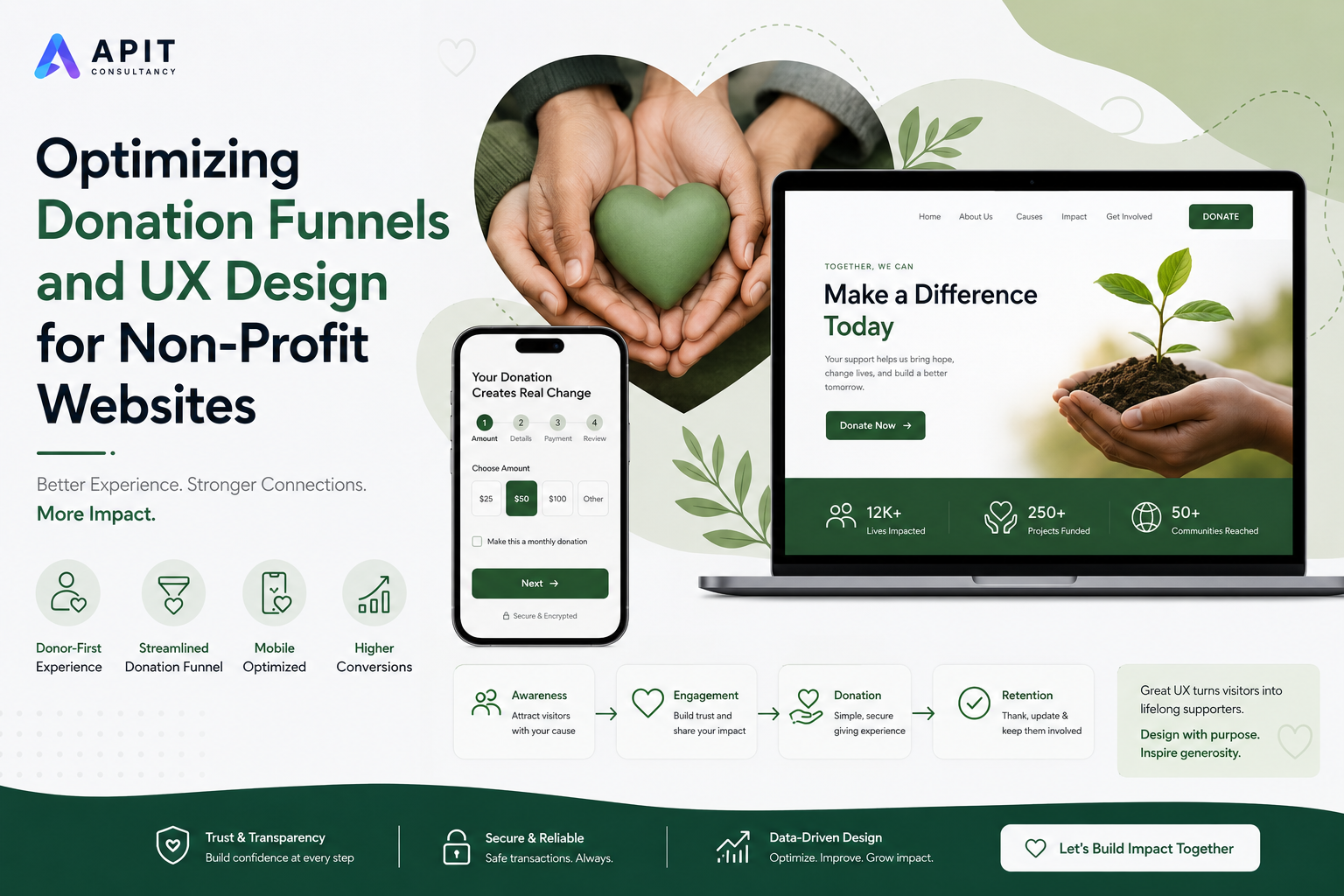
Place visible “Donate Now” buttons throughout your website and ensure they stand out from surrounding content.
Allow visitors to choose one-time or recurring donations, multiple payment methods, and preset contribution amounts while also providing custom donation options.
A fast, secure, and mobile-friendly donation experience increases the likelihood of completed contributions.
Showcase Social Proof
People feel more confident supporting organizations trusted by others.
Display testimonials from donors, volunteers, beneficiaries, corporate partners, and community leaders.
Highlight media coverage, awards, certifications, and partnerships with respected organizations.
Showing the number of lives impacted, volunteers involved, projects completed, or funds raised further strengthens credibility.
Social proof reassures visitors that your organization has a meaningful track record.
Prioritize Mobile Responsiveness
Many supporters discover non-profit organizations through social media on their smartphones.
Your website should automatically adapt to every screen size while maintaining excellent readability and usability.
Donation forms, event registrations, contact information, and volunteer applications should work seamlessly across mobile devices.
Responsive websites create better user experiences and improve search engine rankings.
Ignoring mobile optimization may result in lost donations and lower engagement.
Improve Website Speed
Performance directly affects user satisfaction and conversion rates.
Visitors expect pages to load quickly, especially when making online donations.
Optimize images, use lightweight code, enable browser caching, implement lazy loading, and choose reliable hosting to improve loading speeds.
Fast websites create smoother experiences while contributing to better Google Core Web Vitals and SEO performance.
Every second saved during page loading helps retain more visitors.
Write Clear Calls to Action
Every important page should guide visitors toward a specific action.
Use clear calls to action such as “Donate Today,” “Become a Volunteer,” “Sponsor a Child,” “Join Our Mission,” or “Support Our Campaign.”
Place these buttons naturally throughout the website without overwhelming users.
Effective calls to action reduce confusion while encouraging meaningful engagement.
Simple, action-oriented language often performs better than vague messaging.
Keep Content Human and Easy to Read
Avoid using overly formal or technical language.
Write conversationally while remaining professional and compassionate.
Break long paragraphs into shorter sections, use descriptive headings, and explain your programs using language that everyone can understand.
Visitors should quickly grasp your organization’s work without needing specialized knowledge.
Clear communication improves accessibility while strengthening emotional connections.
Strengthen SEO and Content Strategy
A well-designed website also needs to attract new visitors.
Publish helpful articles, campaign updates, volunteer stories, event announcements, fundraising tips, and educational resources related to your mission.
Optimize pages using descriptive headings, relevant keywords, internal links, and image alt text.
Consistent content creation helps improve search visibility while positioning your organization as a trusted authority within its field.
Organic traffic can become an important source of future donors and volunteers.
Focus on Security
Visitors must feel confident when sharing personal information or making online donations.
Use SSL certificates, secure payment gateways, strong authentication, regular backups, and routine software updates to protect user data.
Clearly display security badges or trusted payment providers where appropriate.
A secure website strengthens credibility while reducing risks associated with online transactions.
Measure and Improve Performance
A successful non-profit website should evolve over time.
Use analytics tools to monitor visitor behavior, donation conversion rates, volunteer registrations, page performance, and popular content.
Testing different headlines, donation buttons, landing pages, and fundraising campaigns helps identify opportunities for improvement.
Continuous optimization ensures your website remains effective as your organization grows.
Final Thoughts
A trustworthy and high-converting non-profit website is built on more than attractive design. It combines transparency, authentic storytelling, responsive performance, intuitive navigation, secure donations, and meaningful calls to action to create a seamless experience that inspires confidence and encourages support. Every element—from your mission statement to your donation form—should reinforce credibility while making it easy for visitors to take meaningful action.
By investing in fast-loading pages, mobile-friendly design, strong security, clear communication, and ongoing optimization, non-profit organizations can build lasting relationships with donors, volunteers, and community partners. A well-designed website not only increases donations and engagement but also helps amplify your mission, expand your reach, and create a greater positive impact for the communities you serve.